Developing 16th and early 17th Century Ornamentation for Historical Trombone
Although often implied as an alternative target instrument in ornamentation treatises for voice, cornetto, viola da gamba and others, the historical trombone was never the specific focus of any primary source on passaggiare from the 16th and early 17th centuries, despite being one of the most ubiquitous instruments across all repertoires and styles due to its flexible chromatic double slide and ability to imitate the human voice.
In this project, I seek to address this disconnect, focusing on the period between the two bookend publications La Fontegara (1535) by Sylvestro Ganassi and Selva de varii passaggi (1620) by Francesco Rognoni Taeggio, taking the methodology and techniques of 16 primary sources and applying them to the historical trombone.
Which ornamentation sources are best suitable for historical trombone technique? How can these sources be translated for the historical trombone? Under which conditions may the ornamentation devices of accento, tremolo, trillo, groppo, intonatio, tirata, cadence examples, and cadenze per finali be applied to historical trombone technique? Which characteristics of the historical trombone enhance or limit specific ornamentation devices, considering note length, range, tonguing, and text emulation?
This project aims to provide the missing secondary source for the historical trombone by delving into the instructions, ornament tables, and example works of the 16 primary sources. It furthermore assesses their playability and applies the findings to modern historical performance practice, developing the understanding of historical trombone through a performance-based approach.
First Supervisor: Prof. Dr. Anne Marie Dragosits, ABU
Second Supervisor: Prof. Dr. Bernhard Rainer, KUG/mdw
Biography
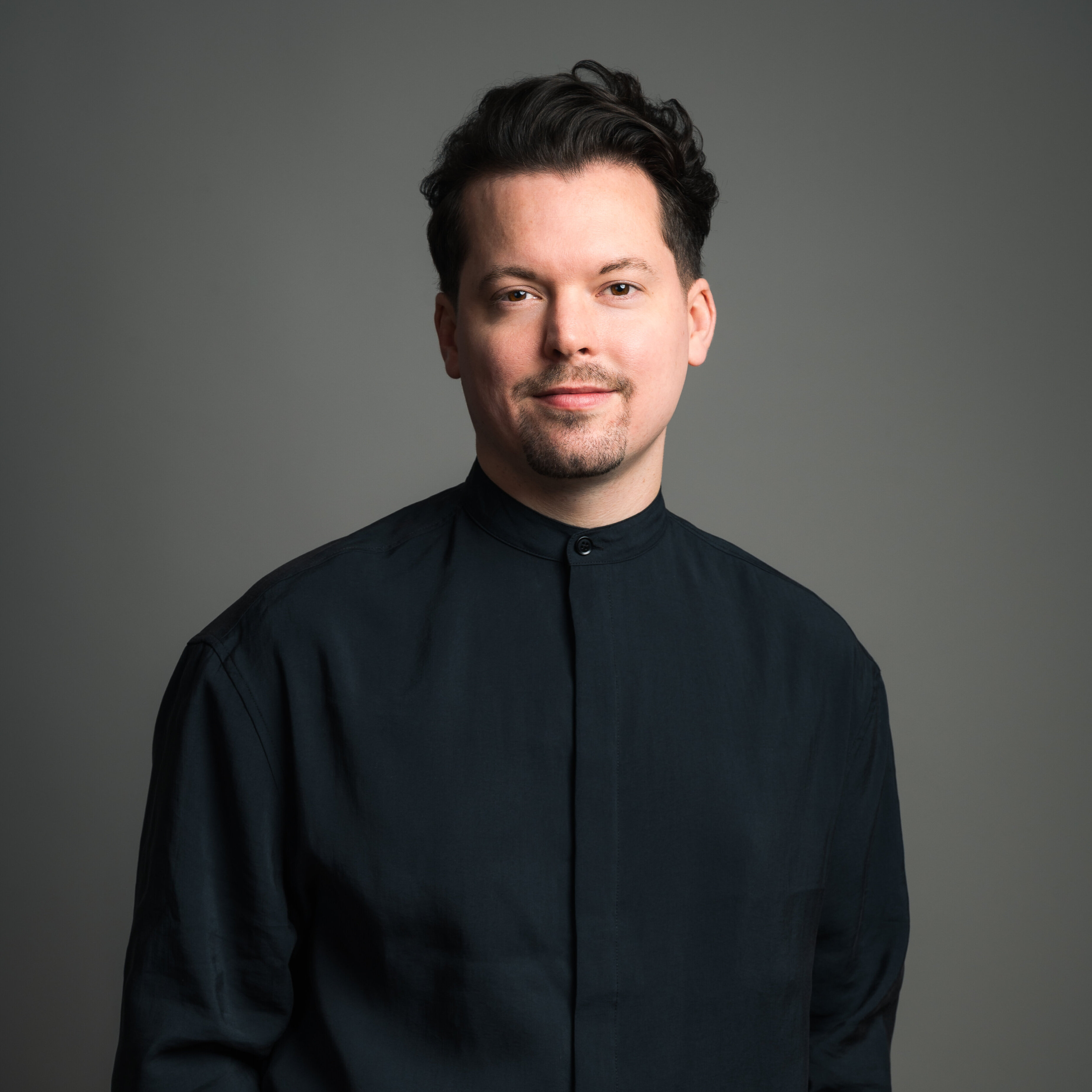
Henry Van Engen is an American-German tenor, historical trombonist and researcher, specializing in music of the Renaissance and Early Baroque eras. He holds degrees from the Schola Cantorum Basiliensis, Musikhochschule Trossingen and Oberlin Conservatory of Music, culminating in publications on Michael Praetorius’s “Italianische Manier”, as well as the first English translation of Herbst’s landmark treatise Musica Practica (1642).
Henry’s debut album Imperial Arias was released in 2026 with Basel-based ensemble Le Filigrane, premiering several newly discovered works for mezzo-soprano, trombone and organ from 18th century Vienna. Additionally, Henry was also chosen to be an Artist-in-Residence for 2024 at Schloss Weißenbrunn, exploring written and improvised ornamentation of the late 16th and early 17th centuries.
Henry performs regularly with renowned ensembles such as Concerto Scirocco, I Fedeli, Le Miroir de Musique, La Fonte Musica, Innsbrucker Hofmusik, Capella Helvetica, Celesti Fiori and many others. He records for a variety of labels such as Ricercar, Linn, MSR Classics, Raumklang, Amadeus, ARS Produktion and Ossa, including the Gramophone award winning Krasinski Codex: 15th Century Music from Cracow.